Tiland
Every island drawn fresh, every table your own
- Host 2 to 6 players
- Online matches of 4
- One purchase
- No sign-up
Never the same island twice
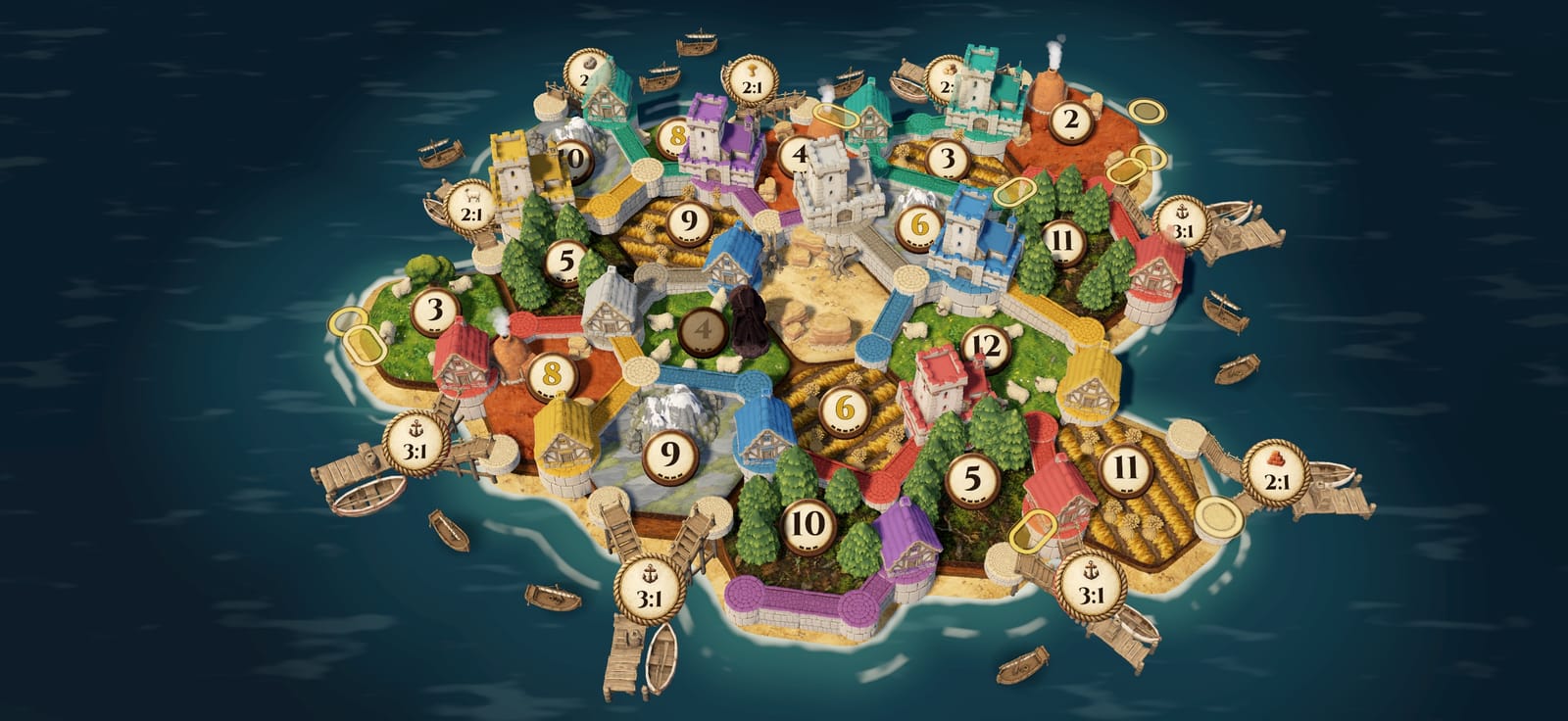
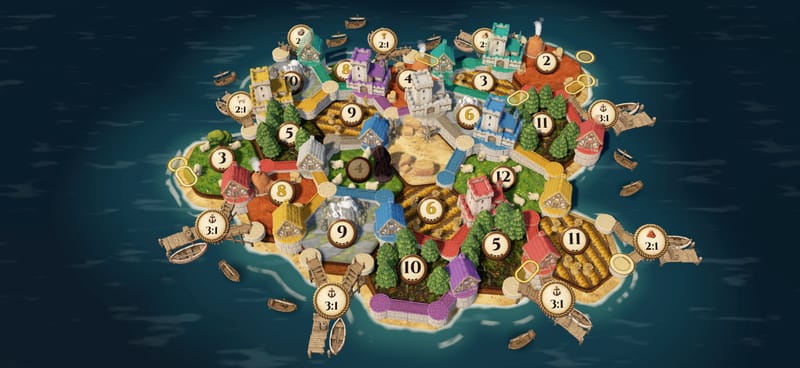
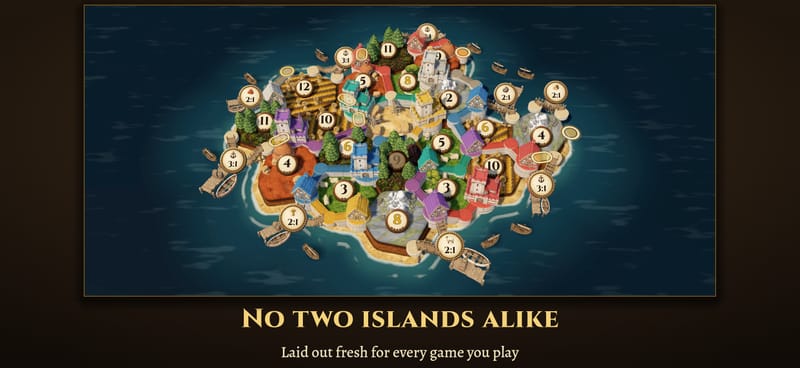
Two hundred islands are drawn and scored for every game, and the highest-scoring one is kept.
Five resources and a desert heart
Roll a tile's number and it pays every building on its corners. The bandit starts on the desert.
Wood
Roads and settlements
Sheep
Settlements and cards
Wheat
Feeds every city
Brick
Roads and settlements
Ore
Three per city
Desert
Yields no harvest
A court deck of its own
Buy a card for sheep, wheat and ore. Play one a turn, never in the turn you bought it.
Knight
Move the bandit and take a card from a player there who holds one. Counts towards the Grand Army.
20 in the deck of 40, 28 in the deck of 53.
Three awards, two points each
Each is held by one player or by nobody. A challenger needs more, and a tie changes nothing.
Grand Army
Most knights played, at least 3.
Grand Road
Longest stretch of road, at least 5 edges.
Harbour Warden
Most harbour points, at least 3. A city counts double.
Tables of two to six
Host a table and share its six-digit code, or join the queue for a table of four. The host sets the island, the pace and the target, from 6 to 20 points.
4seats
A hosted table of 4: a suggested island of 19 tiles and a deck of 40 court cards. A table found online plays 24 tiles.
Nobody waits on a phone
At the standard pace, a candle burns through the last 20 seconds of an idle turn. A phone that goes dark is waited for, then played around.
45 s
of quiet
No clock shows while you play.
20 s
of candle
A touch puts it out.
3 + 3 min
turn cap and bank
A quick turn earns bank time back.
2 min
for a dropped phone
Then your turns are skipped.
Made for a phone held sideways
One finger pans, a pinch zooms, and nothing is built on a stray tap.
The whole island No two islands alike 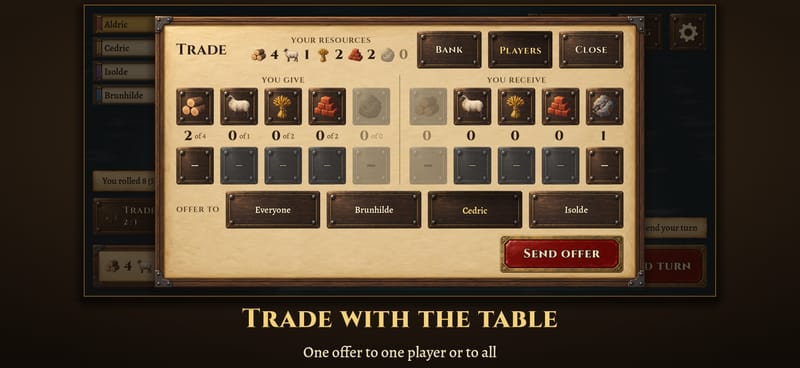
Trade with the table 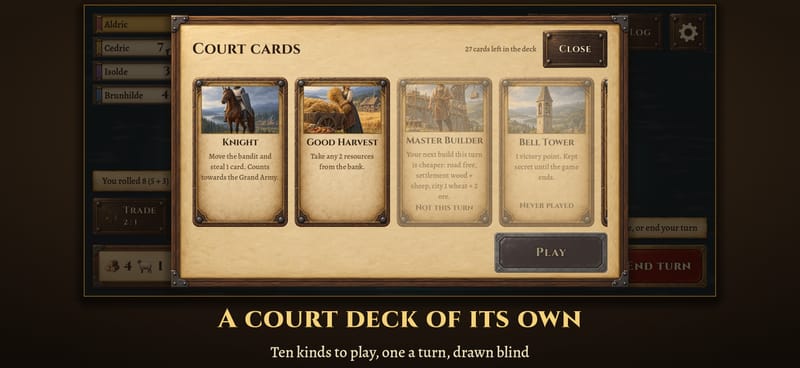
A court deck of its own 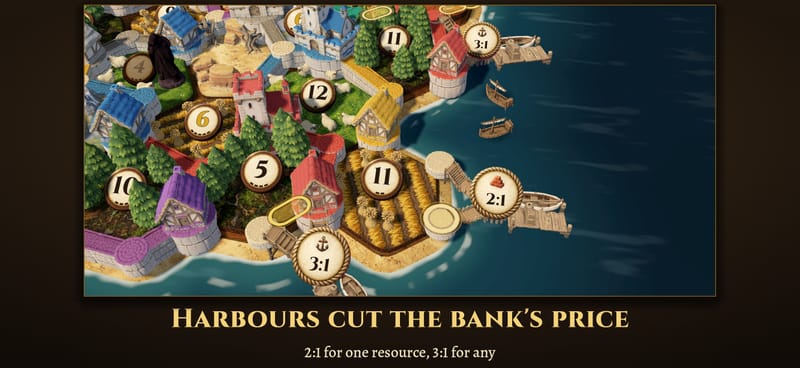
Harbours cut the bank's price 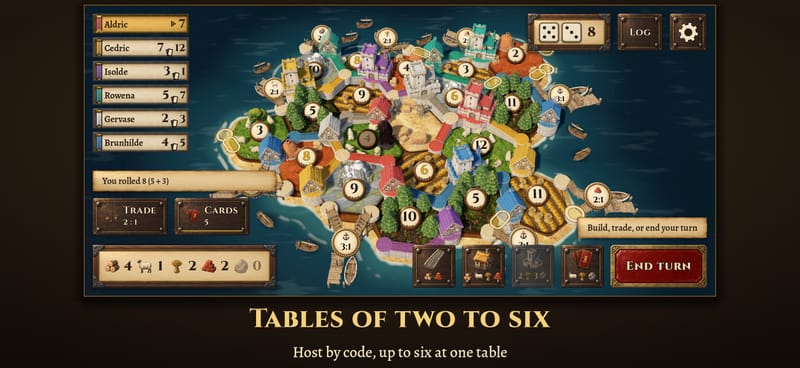
Tables of two to six 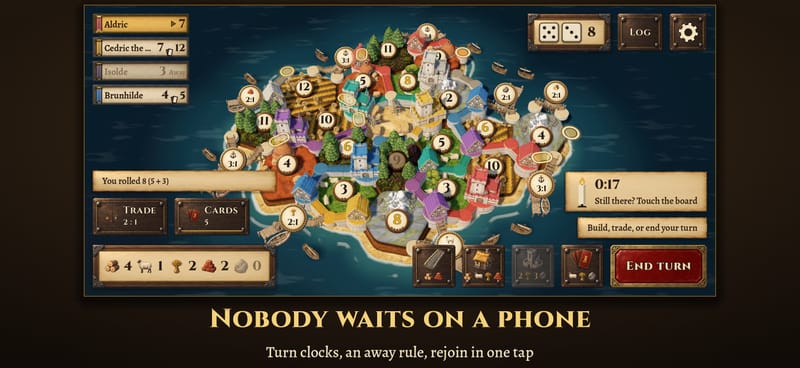
Nobody waits on a phone 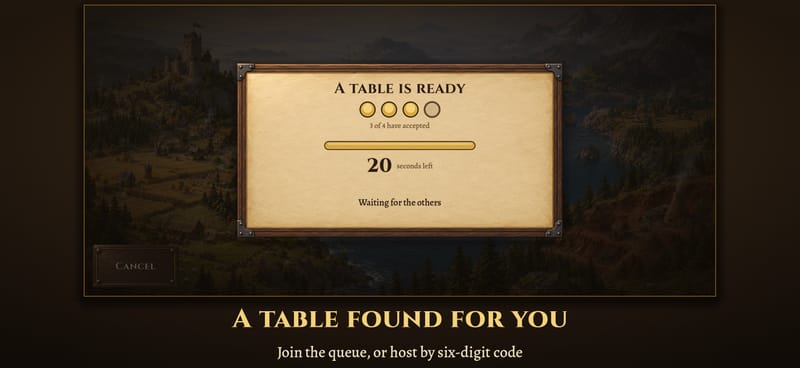
A table found for you
Bought once, and that is all
Buy once. No ads, no in-app purchases, no subscription.
One purchase
Nothing more to buy, ever.
No ads
Nothing stands between you and the island.
No sign-up
No e-mail and no password. The first launch draws you a name.
Take your seat at the table
Tiland is played online and needs an internet connection. The game is in English.
Read the rules